

APA 7th updates for 2026
APA 7th edition is the standard for social science and education papers. While the core rules are stable, the APA occasionally issues clarifications to handle new digital source types or edge cases. You don't need to worry about a massive 8th edition overhaul yet, but keeping up with these small shifts keeps your work professional.
This guide focuses on the current best practices and addresses areas where writers often stumble. We won’t dwell on changes from 6th edition—many resources already cover that ground—but instead, we’ll concentrate on practical application for 2026 and beyond. The core principles of clarity, precision, and consistency remain paramount.
Think of these rules as a shared language for researchers. If you're writing for a class, your professor might have their own quirks—like requiring a running head when the official manual says you don't need one. Check the syllabus first. Otherwise, stick to the standard 7th edition rules.
Setting up the title page
Student and professional title pages look different. Students must always include one, while professional requirements depend on the specific journal or publisher.
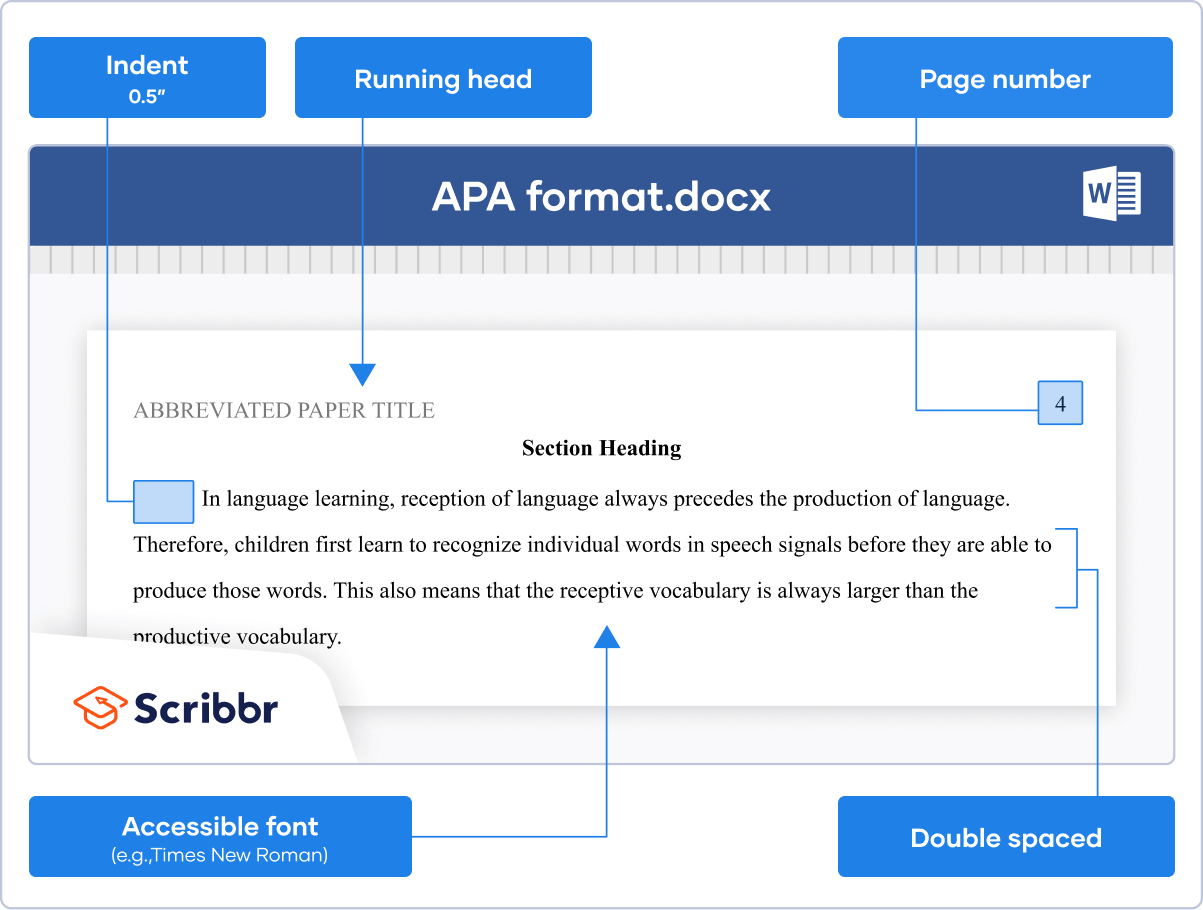
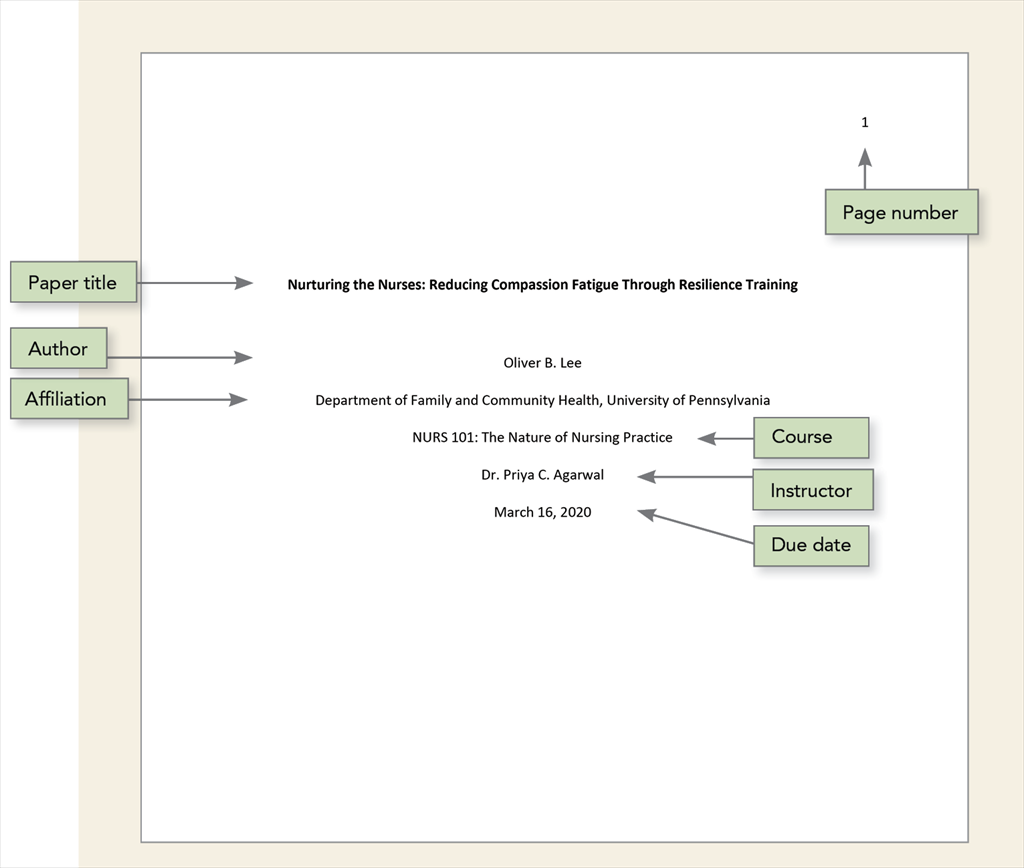
For all papers, the title page includes the paper title, your name, and your institutional affiliation. The title should be concise but informative, ideally under 12 words. Center the title, your name, and the affiliation on the page. Page numbers are in the upper right corner. A running head is no longer required for student papers, which simplifies things considerably.
Professional papers differ primarily in the inclusion of an author note. This note provides details about the research, funding sources, and contact information. Spacing is also crucial: double-space everything. Centering errors are a common issue, so double-check your work. The institutional affiliation should be the school or organization where the work was done, listed on its own line.
Specifically, the layout is as follows: Page number (top right), Title (centered, bold), Your Name (centered), Institutional Affiliation (centered). For student papers, also include the course number and name, and the instructor’s name. The date is placed one inch below the institutional affiliation. Formatting these elements correctly prevents a negative first impression.
In-text citation basics
In-text citations are the backbone of academic integrity. They tell your reader where your information comes from. The basic format includes the author’s last name and the year of publication. For example: (Smith, 2023). The specifics change depending on the number of authors and the type of citation—direct quote versus paraphrase.
With one or two authors, include both last names: (Smith & Jones, 2022). For three or more authors, use the first author’s last name followed by “et al.”: (Smith et al., 2023). This rule applies from the first citation. Group authors (organizations, government agencies) are cited similarly: (American Psychological Association, 2020).
Direct quotes require a page number: (Smith, 2023, p. 25). Paraphrasing and summarizing generally don’t, but including a page number can be helpful, especially for lengthy or complex works. Narrative citations integrate the author’s name into your sentence: Smith (2023) argues that… Parenthetical citations place the information in parentheses at the end of the sentence.
Handling missing information can be tricky. If there’s no date, use “n.d.”: (Smith, n.d.). If there’s no author, use the title of the work (shortened if necessary): (“Study Finds,” 2024). Always prioritize accuracy and completeness. Remember that a lack of proper citation is plagiarism, even if unintentional.
- One author: (Smith, 2023)
- Two authors: (Smith & Jones, 2022)
- Three+ authors: (Smith et al., 2023)
- Direct quote: (Smith, 2023, p. 25)
Building the reference list
The reference list is a comprehensive catalog of all sources cited in your paper. It appears at the end of your document on a new page. The basic format for any reference includes the author, date, title, and source. The order of these elements, and the punctuation used, varies depending on the source type.
For a journal article, the format is: Author, A. A., Author, B. B., & Author, C. C. (Year). Title of article. Title of Journal, Volume(Issue), Page numbers. For a book, it’s: Author, A. A. (Year). Title of book. Publisher. Notice the italics for both journal titles and book titles. Correct punctuation is vital – periods after each element, commas between author names.
Websites are often trickier. If the author is unknown, start with the title of the page. Include the date of publication or retrieval date. Provide the URL. For reports, include the issuing organization and report number. Electronic sources generally require a DOI if available. If no DOI is present, provide a stable URL.
Formatting titles requires careful attention. Use sentence case—only the first word and proper nouns are capitalized. For source names (journal titles, book titles), use title case—capitalize the major words. Handling sources with no author or date requires using the title in place of the author and "n.d." for the date. Consistency is key across your entire reference list.
- Journal Article: Author, A. A. (Year). Title of article. Title of Journal, Volume(Issue), Page numbers. DOI
- Book: Author, A. A. (Year). Title of book. Publisher.
- Website: Author, A. A. (Year, Month Day). Title of page. Website Name. URL
DOI and URL formatting
Use a DOI instead of a URL whenever possible. These links are permanent, so they won't break if a website moves its files. Most DOIs now look like standard web links starting with https://doi.org/.
If a DOI is unavailable, provide a stable URL. Avoid using shortened URLs (like bit.ly) as they can break. When a DOI and URL are both present, use the DOI. If you’re citing a source accessed through a database, you generally do not include the database name in the reference list entry.
Formatting URLs correctly is important. Ensure the link is active and leads directly to the source. Avoid adding a period at the end of the URL. Many students struggle with this, so double-checking is crucial. The APA Style website provides detailed guidance on formatting URLs for various source types.
A common mistake is including access dates for websites unless the content is likely to change. If the website is static, an access date isn’t necessary. Prioritize providing a clear, stable link to the source. Remember, the goal is to make it easy for your reader to locate the information.
Handling Specific Source Types
Beyond journal articles, books, and websites, you’ll encounter a variety of other source types. Social media posts require the author’s username, the date of the post, and the content of the post. For example: @APAStyle (2024, January 26). New guidance on in-text citations. [Post]. X (formerly Twitter).
Legal cases require specific formatting, including the case name, volume number, reporter abbreviation, and page number. Government documents often have agency names as authors and report numbers. Conference proceedings require the title of the proceedings, the location, and the date. The Purdue OWL is an excellent resource for these less common source types.
To cite a legal case, use the format: Brown v. Board of Education, 347 U.S. 483 (1954). For a government document, such as a report from the CDC, use the agency as the author. The formatting can be complex, so consult the APA Style manual or the Purdue OWL for detailed examples.
Remember that the core principles of APA style—accuracy, clarity, and consistency—apply to all source types. Don't be afraid to consult multiple sources to ensure you're formatting your citations correctly. Each source type has its nuances, and careful attention to detail is essential.
Common mistakes to avoid
Even experienced writers make mistakes with APA style. Some of the most frequent errors include incorrect capitalization in titles, missing information in reference list entries, improper punctuation (especially commas and periods), and inconsistent formatting throughout the document.
Another common mistake is misinterpreting the rules for in-text citations, particularly when dealing with multiple authors or group authors. Students often forget to include page numbers for direct quotes or use “et al.” incorrectly. Incorrectly formatting DOIs and URLs is also prevalent.
From my experience as a writing tutor, I’ve noticed many students struggle with the difference between sentence case and title case. They also sometimes omit the running head (though remember, it’s not required for student papers anymore!). Proofreading carefully and using a checklist can help catch these errors.
The best way to avoid these mistakes is to familiarize yourself with the APA Style manual and the Purdue OWL. Pay attention to detail, double-check your work, and ask for feedback from others. A little effort can go a long way in ensuring your paper is properly formatted.
- Mixing up sentence case and title case in article titles
- Missing information in reference list entries
- Improper punctuation
- Inconsistent formatting
APA Error Diagnosis: Common Formatting Issues
| Error Description | Likely Cause | Corrective Action |
|---|---|---|
| Incorrect Author Formatting | Confusion regarding initials vs. full names; inconsistent use of 'and' vs. '&' | Consult the APA Style manual or Purdue OWL for specific guidelines on author lists. Use '&' before the last author's name when listing multiple authors. |
| Missing or Incorrect DOI | Lack of attention to detail; overlooking the DOI when available; confusion about what constitutes a DOI | Always include the DOI if available. If a DOI is not available, provide the URL. Verify the DOI is accurate and correctly formatted. |
| Improper Punctuation in Citations | Misunderstanding of APA’s punctuation rules for in-text citations and reference list entries | Carefully review APA’s punctuation guidelines for parenthetical and narrative citations. Pay attention to commas, periods, and italics. |
| Incorrect Date Format | Using a date format other than the specified APA style (Year, Month Day) | Always use the format (Year, Month Day) for dates in references. Note that the month is not abbreviated. |
| Inconsistent Indentation of Reference List | Failure to apply a hanging indent correctly; using tabs instead of the paragraph formatting feature | Ensure all reference list entries use a hanging indent of 0.5 inches. Use the paragraph formatting feature in your word processor, *not* tabs. |
| Title Case Errors in Reference List | Incorrect capitalization of article and book titles in the reference list | Capitalize only the first word of the title and subtitle, and any proper nouns. Consult examples on Purdue OWL to confirm capitalization. |
| Incorrect Italicization | Misunderstanding which elements should be italicized (e.g., book titles, journal titles, report titles) | Italicize book titles, journal titles, and report titles. Do not italicize article titles or chapter titles. |
Illustrative comparison based on the article research brief. Verify current pricing, limits, and product details in the official docs before relying on it.
No comments yet. Be the first to share your thoughts!