

The logic of book titles
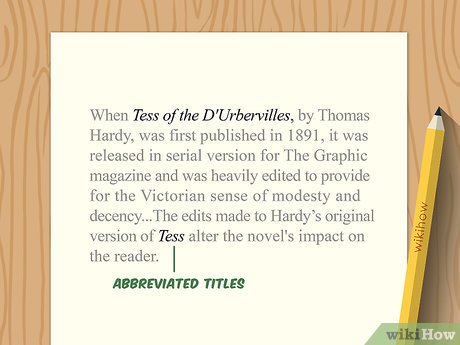
Formatting book titles isn't just about following arbitrary rules. It creates a visual cue that separates the work from your own prose. Without italics or quotes, a title like A Farewell to Arms just looks like a fragment of a sentence, confusing the reader about where the book ends and your analysis begins.
The core principle is differentiation. We need a way to set titles apart without disrupting the flow of the writing. The two dominant styles – MLA and APA – offer distinct approaches to achieve this. MLA generally favors italics or quotation marks, while APA leans heavily towards italics. Understanding these differences is the first step towards polished, credible essay writing.
Consistent formatting isn’t just about following rules; it’s about demonstrating attention to detail and respect for your sources. When you meticulously format book titles, you signal to your instructor that you’ve taken the time to understand and apply the conventions of academic discourse. It builds trust in your work and enhances your overall presentation. It’s a small detail that makes a big difference.
MLA: italics or quotes?
MLA style generally calls for italicizing full book titles. So, Pride and Prejudice would be italicized throughout your essay. This is the standard approach for identifying complete works. However, things get trickier when a book title appears within another title, such as the title of an essay or a chapter within a book. In these cases, use quotation marks. For example, you might write about Jane Austen’s essay, “On the Necessity of Knowing the Characters of Plays.”
Nested quotations are more complex. If you write about an essay titled “Reading Pride and Prejudice,” use quotation marks for the essay and italics for the book. The MLA Style Center notes that if a title within a title already uses quotation marks, you don't need to double them up. This keeps the punctuation from becoming a distraction.
Let’s look at some examples. Correct: “In her essay, "The Influence of Victorian Novels,’ Professor Smith discusses Great Expectations.” Incorrect: “In her essay, ‘The Influence of Victorian Novels,’ Professor Smith discusses ‘Great Expectations".” Another incorrect example: In her essay, “The Influence of Victorian Novels,” Professor Smith discusses Great Expectations. Remember, consistency is key. Stick to the rules and double-check your work.
These rules apply to footnotes and endnotes too. Whether the title is in your lead paragraph or a citation at the bottom of the page, the formatting stays the same.
- Italicize full book titles like To Kill a Mockingbird.
- Use quotation marks for book titles found within essay or chapter titles, such as “Analyzing Hamlet”.
- Nested Quotes: Don’t add extra quotation marks if a title within a title is already quoted.
APA: a simpler approach
APA style offers a more straightforward approach to formatting book titles. Generally, you always italicize book titles in the body of your essay. This consistency minimizes confusion and streamlines the reading experience. Unlike MLA, APA doesn’t typically use quotation marks for book titles within other titles; it relies solely on italics.
However, the application of italics differs slightly in the reference list. While book titles are still italicized, the overall format of the entry follows specific APA guidelines for author, date, and publisher. It's easy to conflate a book title with a journal title in APA, so be mindful. Journal titles are italicized as well, but the surrounding information is formatted differently. A quick reference to the APA Publication Manual is always helpful.
Edited volumes and anthologies present another consideration. In APA, you italicize the title of the edited book, but you don’t italicize the titles of the individual chapters within it. For example, you’d write: “In the chapter "The Art of Storytelling’ from The Complete Guide to Creative Writing…” It"s a subtle distinction, but crucial for accurate formatting.
Digital sources and ebooks
Do digital books require different formatting than print books? The short answer is generally no. The core formatting rules for book titles – italics in APA, italics or quotation marks in MLA – remain the same regardless of the medium. Whether you're citing an eBook from Kindle, a book accessed through Google Books, or a text from Project Gutenberg, the title itself is formatted according to the chosen style guide.
However, when citing digital sources, you’ll need to include additional information, such as the DOI (Digital Object Identifier) or the URL. The DOI is preferred when available, as it provides a persistent link to the source. If no DOI is available, include the URL. Platform-specific requirements might exist, but the fundamental formatting of the title remains consistent.
While Kindle or Project Gutenberg might have internal metadata styles, academic essays prioritize the style guide over the platform. Stick to MLA or APA for the title, then add the DOI or URL as required by the specific edition you used.
Titles within titles
Let's tackle the most challenging scenarios: book titles embedded within other titles. This is where confusion often arises. Consider this: you're writing about an essay titled “The Significance of Moby-Dick in American Literature.” In MLA, you’d use quotation marks for the essay title and italicize Moby-Dick. In APA, you’d italicize both the essay title and Moby-Dick.
Here’s a more complex example: a chapter titled “A Critical Analysis of Shakespeare’s Hamlet” within a book. Following MLA guidelines, you’d use quotation marks for the chapter title and italicize Hamlet. In APA, both would be italicized. To help visualize these scenarios, here’s a decision table:
| Style | Title Within Title | Book Title | Example |
|---|---|---|---|
| MLA | Essay Title | Book Title | “The Themes in The Great Gatsby” |
| MLA | Chapter Title | Book Title | “A Study of Pride and Prejudice” |
| APA | Essay Title | Book Title | “The Influence of 1984” |
| APA | Chapter Title | Book Title | “An Examination of Brave New World” |
Remember to pay close attention to punctuation. Titles that contain commas, colons, or other special characters should be formatted correctly according to your chosen style guide. Don’t let punctuation throw you off; focus on the core principles of italics and quotation marks.
Book Title Formatting: MLA vs. APA (2026 Guidelines)
| Context | MLA | APA |
|---|---|---|
| Book Title in Essay Title | Italicize the full book title. Example: *Pride and Prejudice* | Do not italicize or use quotation marks. Capitalize only the first word, and any proper nouns. Example: Pride and prejudice. |
| Book Title Within Text | Italicize the full book title. Example: As explored in *To Kill a Mockingbird*... | Do not italicize or use quotation marks. Capitalize only the first word, and any proper nouns. Example: As explored in Pride and prejudice... |
| Chapter Title | Enclose chapter titles in quotation marks. Example: "Chapter One" | Do not italicize or use quotation marks. Capitalize only the first word, and any proper nouns. Example: Chapter one. |
| Referring to a Book Series | Italicize the series title. Example: *The Hunger Games* series | Do not italicize the series title. Capitalize only the first word, and any proper nouns. Example: The Hunger Games series |
| Book Title in a Works Cited Entry | Italicize the full book title. Author, A. A. *Book Title*. Publisher. | Italicize the full book title. Author, A. A. (Year). *Book title*. Publisher. |
| Book Title in a Reference List Entry | Not applicable - MLA uses Works Cited. | Author, A. A. (Year). *Book title*. Publisher. |
Illustrative comparison based on the article research brief. Verify current pricing, limits, and product details in the official docs before relying on it.
Common mistakes
Students frequently make a few common errors when formatting book titles. Inconsistent italicization is a big one – switching between italics and quotation marks mid-essay. Another frequent mistake is forgetting to format the title at all, leaving it looking like just another phrase in the text. Incorrect use of quotation marks is also common, particularly when dealing with titles within titles.
Proofreading carefully is essential. Read your essay specifically looking for book titles and double-check that they’re formatted correctly. It's easy to overlook these details when you’re focused on the content of your writing. Don’t rely solely on spellcheck or grammar check; they won’t catch formatting errors.
Finally, be mindful of titles in different languages. If you’re citing a book with a non-English title, follow the same formatting rules as you would for an English title. However, you may need to provide a translation in your bibliography or notes.
Series and subtitles
What about book series? How do you format the series title alongside the book title? Both MLA and APA generally treat the series title like any other book title – italicize it. For example: The Lord of the Rings (The Fellowship of the Ring). The individual book title is also italicized, as it's a complete work within the series.
Books with subtitles require a bit more nuance. In both MLA and APA, you typically italicize the main title and the subtitle. So, The Hitchhiker’s Guide to the Galaxy: A Trilogy in Five Parts would be fully italicized. However, if the subtitle is clearly explanatory rather than an integral part of the title, you might consider using roman type (non-italicized) for the subtitle. Consult the style guide for specific guidance.
These are less common scenarios, so it’s important to consult the official MLA Handbook or the APA Publication Manual for definitive answers. Don’t rely on guesswork; precision is key when it comes to academic formatting.

No comments yet. Be the first to share your thoughts!