

What synthesis actually means
A climate change synthesis essay isn’t simply a research report; it’s a focused argument constructed from a variety of sources. The core of this type of assignment is the 'synthesis' itself – bringing together different perspectives to create a new understanding, rather than just summarizing existing information. It demands critical thinking and a sophisticated understanding of the topic.
These assignments are standard in environmental and political science because the subject is messy. You can't just pick one side; you have to show how different data points collide. Professors want to see if you can handle that friction without getting lost in the noise.
I’ve noticed many students struggle initially with the synthesis aspect. They tend to fall into the trap of simply stringing together quotes or paraphrases. The challenge is to identify connections, contradictions, and nuances across sources to build a cohesive and original argument. It’s a higher-level skill than traditional research papers, and it requires practice.
Building a thesis that argues
A strong thesis statement is the bedrock of any successful synthesis essay. Without a clear, arguable claim, your essay will lack focus and direction. Starting with a broad topic like 'climate change' isn’t enough; you need to narrow your focus and present a specific perspective. A weak thesis is often too general or simply states a fact.
For example, a weak thesis might be: 'Climate change is a serious problem.' That’s a statement of fact, not an argument. A stronger thesis could be: 'While technological innovations offer potential solutions to mitigate climate change, addressing the underlying socio-economic inequalities that exacerbate vulnerability is equally crucial for achieving sustainable resilience.' See how that’s specific and arguable?
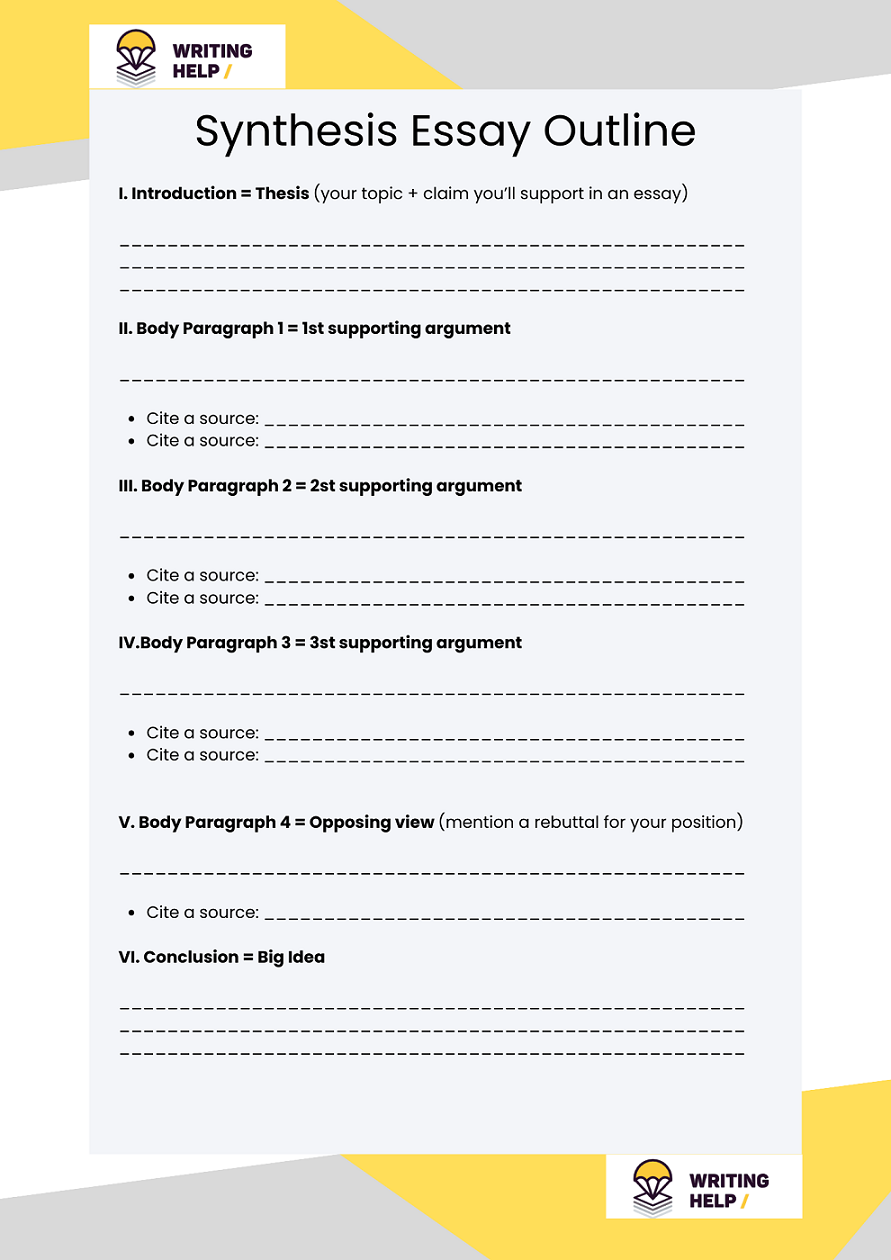
Before you even begin writing, create a detailed outline. This isn't a rigid structure, but a roadmap to guide your research and writing. Organize your sources thematically, identifying key arguments and potential points of synthesis. A well-structured outline will prevent your essay from becoming a disjointed collection of information.
Where to find credible data
Finding reliable information is paramount. Don’t rely solely on the first few results from a Google search. Peer-reviewed journals are an excellent starting point – databases like JSTOR and ScienceDirect are invaluable. Government reports, such as those published by the Intergovernmental Panel on Climate Change (IPCC), provide comprehensive assessments based on extensive research.
Reputable non-governmental organizations (NGOs) like the World Wildlife Fund and the Environmental Defense Fund also offer valuable insights, but be mindful of their advocacy positions. News sources can be useful, but prioritize those with a strong track record of journalistic integrity, like the New York Times or the Guardian. Always check for bias and consider the source’s funding.
Don't just stick to hard science. If you only cite atmospheric data, you miss the human side of the problem. I've found that mixing economic reports with sociological studies makes for a much more convincing argument. It shows you aren't looking at the world through a straw.
Synthesis Essay Components
- Thesis Statement - A clear, concise statement articulating your position on a complex aspect of climate change, informed by multiple sources.
- Source Integration - Seamlessly weave evidence from a variety of sources to support your claims; avoid simply summarizing each source individually.
- Argumentative Structure - Organize your essay logically, often using a point-by-point or topic-by-topic approach to compare and contrast perspectives.
- Source Diversity - Utilize a range of source types, including peer-reviewed journal articles, government reports (e.g., IPCC reports), and reputable news organizations.
- Credibility Evaluation - Rigorously assess sources using criteria such as peer review status, author expertise, publication date, funding sources, potential bias, clear methodology, and evidence-based reasoning.
- MLA or APA Formatting - Adhere to the specific formatting guidelines (MLA or APA) required by your instructor, including in-text citations and a Works Cited/References page.
- Synthesis, Not Summary - Focus on identifying relationships, patterns, and contradictions between sources, rather than simply restating their individual arguments.
Moving past simple quotes
Simply dropping quotations into your essay is not synthesis. Effective integration requires paraphrasing, summarizing, and, most importantly, analyzing how different sources relate to each other. Do they agree? Do they disagree? Do they offer complementary perspectives? Your job is to identify these connections and explain their significance.
For example, you might find that a study by the National Oceanic and Atmospheric Administration (NOAA) provides data on rising sea levels, while a report by the World Bank discusses the economic impacts of coastal flooding. Synthesizing these sources would involve demonstrating how the NOAA data supports the World Bank’s claims about economic vulnerability. This shows you’re not just reporting information – you’re making an argument.
Proper citation is non-negotiable. The Purdue OWL (owl.purdue.edu) is an excellent resource for MLA and APA style guidelines. Whether you're using direct quotes, paraphrasing, or summarizing, always provide clear and accurate citations to avoid plagiarism. Learning these styles can be tedious, but mastering them is essential for academic integrity.
MLA and APA requirements
Formatting may seem like a minor detail, but it demonstrates professionalism and attention to detail. Both MLA and APA styles have specific requirements for headings, citations, and the works cited/references page. The Purdue OWL provides comprehensive guidance on both styles, including example documents.
In MLA, for instance, the heading typically includes your name, instructor’s name, course name, and date, all double-spaced. In-text citations use the author-page number format. APA, on the other hand, requires a title page with a running head and abstract. In-text citations use the author-date format. Pay close attention to these differences.
Check your spacing and font sizes before submitting. Small errors in a bibliography make the whole paper look rushed. If you get stuck on a specific citation type, the Purdue OWL site is the best place to double-check the rules.
MLA vs. APA: Formatting for Climate Change Synthesis Essays
| Element | MLA | APA |
|---|---|---|
| Title Page | Generally not required; instructor preference dictates if a separate title page is needed. Instead, information is typically placed in the upper left-hand corner of the first page. | Always required. Includes a running head, page number, title, and author affiliation. |
| Headings | Uses a hierarchical system of Arabic numerals, capitalization, and indentation to denote levels of headings. Consistency is key. | Employs a hierarchical system with five levels of headings, using centered, boldface titles and different levels of indentation. Level 1 is centered and bold, while lower levels utilize indentation and varying degrees of boldness. |
| In-text Citations | Uses parenthetical citations including the author’s last name and page number(s) – (Smith 25). | Uses parenthetical citations including the author’s last name and year of publication – (Smith, 2024). Page numbers are included for direct quotes (Smith, 2024, p. 25). |
| Reference List | Entitled ‘Works Cited’. Entries are alphabetized by the author’s last name. Includes all sources used in the paper. | Entitled ‘References’. Entries are alphabetized by the author’s last name. Includes all sources cited in the paper. |
| Source Emphasis | MLA emphasizes the author. Citations prioritize the author’s name. | APA emphasizes the date of publication. Citations prioritize the year of publication to reflect the currency of research. |
| Margins & Spacing | One-inch margins on all sides; double-spaced throughout, including headings, block quotes, and Works Cited entries. | One-inch margins on all sides; double-spaced throughout, including headings and the reference list. |
Illustrative comparison based on the article research brief. Verify current pricing, limits, and product details in the official docs before relying on it.
New data to watch in 2026
Looking ahead to 2026, several areas of climate research are likely to be prominent in synthesis essays. Advancements in climate modeling, particularly the development of higher-resolution models, will provide more detailed regional projections. New datasets on extreme weather events – heatwaves, droughts, floods – will offer further evidence of climate change impacts.
The evolving understanding of climate feedback loops – processes that amplify or dampen climate change – will also be crucial. For example, research on the role of permafrost thaw in releasing greenhouse gases is rapidly expanding. Students should be prepared to engage with these new findings and incorporate them into their analyses.
We are also seeing more focus on how climate change hits specific communities harder than others. This isn't just about melting ice; it's about social justice. Keeping up with these shifts is work, but it's what makes an essay feel relevant rather than dated.
Essential Climate Science Books for Synthesis Essay Writers

Explores the potential catastrophic impacts of unchecked climate change. · Details scenarios for different warming levels. · Discusses the human and societal consequences of global warming.
This book provides a stark look at the potential future under various warming scenarios, offering crucial context for understanding the urgency of climate action.

Presents a detailed roadmap of 100 substantive solutions to global warming. · Quantifies the impact of each solution on greenhouse gas reduction. · Covers a wide range of sectors including energy, food, land use, and industry.
Drawdown offers a solutions-oriented perspective, detailing actionable strategies and their potential impact, which is essential for developing comprehensive synthesis essays.

Argues that the climate crisis is an opportunity to transform our economic system. · Examines the relationship between fossil fuel-based capitalism and climate change. · Explores the social and political dimensions of climate action.
This book challenges conventional thinking by linking the climate crisis to economic structures, providing a critical lens for analyzing policy and societal responses.

Investigates the tactics used to create doubt about scientific consensus. · Traces the history of disinformation campaigns on issues like tobacco and climate change. · Highlights the role of think tanks and industry funding in shaping public opinion.
Understanding the history of climate science denial, as detailed in this book, is vital for critically evaluating information and constructing well-supported arguments in synthesis essays.

Provides clear and concise answers to common questions about climate change. · Covers the science, impacts, and policy responses to global warming. · Accessible to a general audience, explaining complex topics simply.
This book serves as an excellent primer, offering a broad overview of climate change fundamentals that are essential for building a strong foundation for any synthesis essay.
As an Amazon Associate I earn from qualifying purchases. Prices may vary.


No comments yet. Be the first to share your thoughts!