

why standard outlines trigger detectors
The rise of AI detection tools in academic settings is undeniable. These tools aren’t necessarily looking for plagiarism in the traditional sense, but for predictability. They flag essays that follow formulaic structures, exhibit repetitive sentence patterns, and lack the nuanced thought characteristic of human writing. It’s easy to see why: AI writing tools themselves often rely on these very patterns. This isn’t about "cheating" or circumventing academic integrity, but about crafting essays that demonstrably showcase genuine understanding.
AI writing models, like many used in 2024, function by predicting the next most probable word in a sequence. This leads to a certain sameness in style and structure. Detection tools capitalize on this, looking for statistically unusual deviations from that predictable pattern. An essay that rigidly adheres to a five-paragraph theme, for example, is more likely to be flagged than one that takes a more circuitous route. The goal is to write like a human thinks – which is rarely in a perfectly linear fashion.
The concern is valid. Tools like Turnitin, while initially designed for plagiarism, have integrated AI detection capabilities. A 2023 study by the University of California, Berkeley, showed that current AI detectors have an average accuracy rate of around 82% when identifying AI-generated text, but this number is constantly evolving. The accuracy will likely increase in 2026, making the need for 'AI-proof' strategies even more critical. These strategies aren’t about tricking the system, but about producing better, more thoughtful work.
We need to remember that AI detectors aren't perfect. They produce false positives, and their effectiveness varies. But it’s prudent to anticipate increasing sophistication in these tools. The following outline formats are designed to move beyond the predictable structures that AI detectors target, helping you create essays that demonstrate original thought and evade flagging, not through deception, but through genuine intellectual engagement.
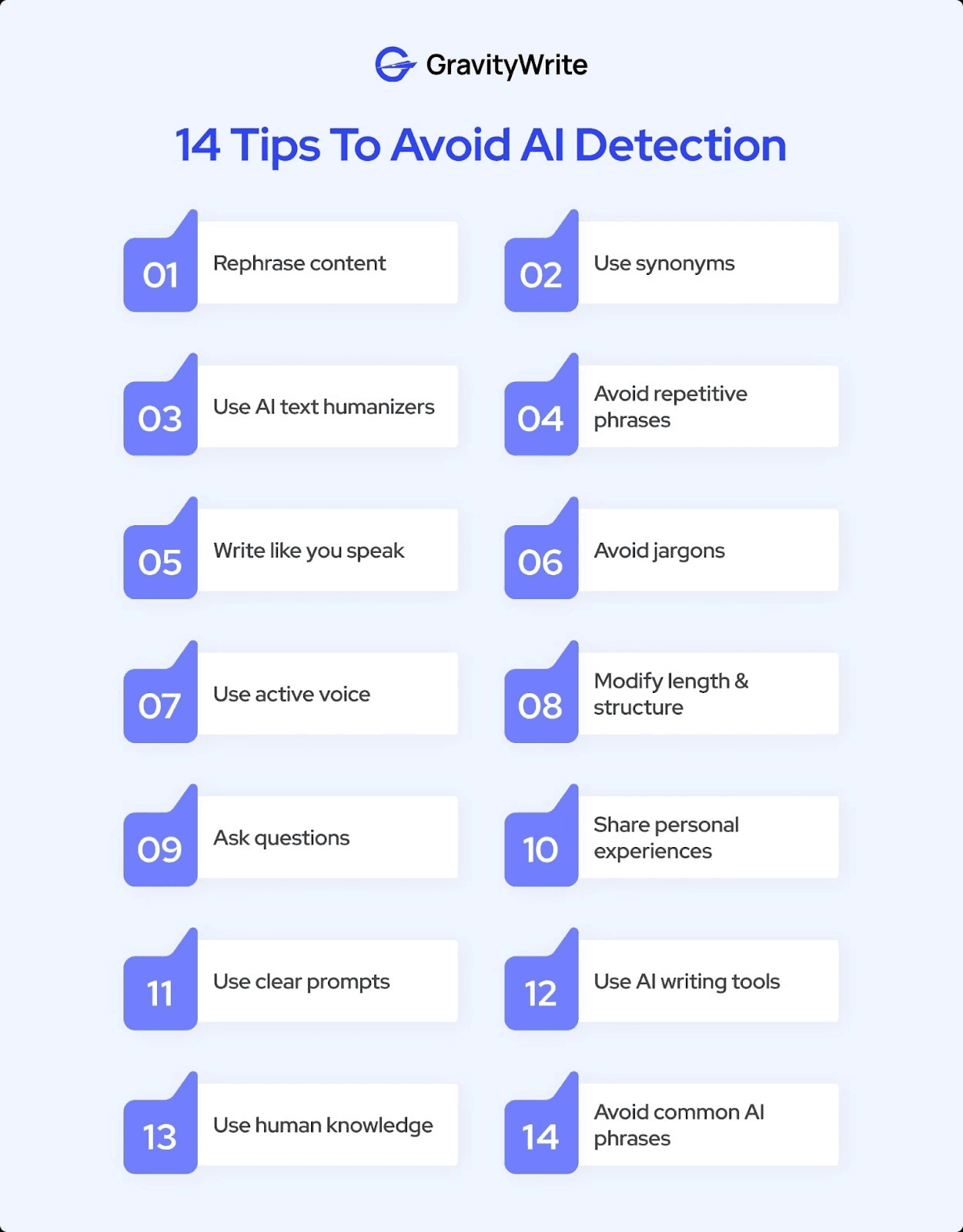
the argument map
The Argument Map outline shifts the focus from linear progression to visual organization. Instead of writing a traditional outline with Roman numerals and bullet points, you begin by identifying your central claim, then branching out to explore supporting arguments, evidence, and potential counterarguments. This non-linear approach makes it significantly harder for AI to identify a predictable flow. Think of it like a mind map, but specifically tailored to argumentative writing.
The core of this method is explicitly stating your assumptions. What underlying beliefs are driving your argument? What evidence supports those beliefs? What are the potential weaknesses in your reasoning? AI often struggles with these meta-cognitive elements. It can generate text, but it can’t critically assess its own foundations. Acknowledging limitations isn’t a sign of weakness; it’s a sign of intellectual honesty and a hallmark of strong argumentation.
Let’s consider a simple example: arguing for the benefits of remote work. Your central claim might be: 'Remote work increases employee productivity.' From there, you’d branch out to supporting arguments like 'reduced commute time,' 'increased flexibility,' and 'improved work-life balance.' For each argument, you’d list supporting evidence (statistics, studies, examples). Crucially, you’d also map out counterarguments: 'potential for isolation,' 'difficulties with collaboration,' and 'challenges with maintaining company culture.'
The real power of the Argument Map comes when you connect these elements. You can visually represent how evidence supports arguments, how arguments address counterarguments, and how assumptions underpin the entire structure. Tools like Coggle or MindManager are useful for creating these maps digitally, but a simple pen and paper work just as well. This isn’t just about organizing your thoughts; it’s about seeing the logic of your argument unfold.
The 'Inquiry-Based' Structure
The Inquiry-Based outline is fundamentally different from traditional argumentative structures. It begins with a genuine question or problem, rather than a pre-determined thesis statement. The essay then explores multiple perspectives, examines conflicting evidence, and considers various interpretations before tentatively arriving at a conclusion. It's less about proving a point and more about investigating a topic.
This process closely mimics how human thought actually works. We rarely start with a firm conclusion and then seek out evidence to support it. More often, we begin with a question, explore different possibilities, and gradually refine our understanding. The Inquiry-Based structure reflects this messy, iterative process, making it harder for AI to detect a predictable pattern. It’s about the journey, not just the destination.
It’s important to note that this doesn’t mean abandoning a thesis statement altogether. You’ll still need one, but it will emerge from your investigation, rather than preceding it. The thesis should reflect the complexity of the topic, acknowledging uncertainties and limitations. This approach is particularly effective for essays that deal with complex ethical or philosophical questions.
Consider the question: 'Is gene editing ethically justifiable?' An Inquiry-Based essay wouldn’t start by declaring a position for or against gene editing. Instead, it would explore the potential benefits (curing genetic diseases, enhancing human capabilities), the potential risks (unforeseen consequences, social inequalities), and the various ethical frameworks that could be applied to the issue. Only after a thorough exploration would the essay arrive at a nuanced and tentative conclusion.
- Start with a question that doesn't have an easy answer.
- Lay out the conflicting perspectives without picking a side yet.
- Step 3: Examine the evidence supporting each perspective.
- Step 4: Identify areas of agreement and disagreement.
- Step 5: Formulate a tentative conclusion based on your investigation.
weaving in counterpoints
The Counterpoint Weave outline is designed to create a dynamic and nuanced argument. The core principle is simple: present a claim, then immediately address a strong counterargument, and finally reconcile the two. This demonstrates intellectual humility and a willingness to engage with opposing viewpoints, qualities that are often missing in AI-generated text.
This isn’t about "weakening’ your argument by acknowledging its flaws. It’s about strengthening it by demonstrating that you’ve considered alternative perspectives. AI often struggles with this kind of intellectual agility. It can generate text that supports a particular viewpoint, but it rarely anticipates and effectively addresses counterarguments. Showing you"ve done this work signals genuine thought.
Let’s take the example of social media’s role in political polarization. A claim might be: 'Social media exacerbates political polarization.' The immediate counterpoint: 'Social media also provides platforms for diverse voices and facilitates political mobilization.' The reconciliation: 'While social media can amplify existing divisions, its potential for fostering dialogue and promoting civic engagement should not be overlooked. The key lies in algorithmic transparency and media literacy.'
This format requires careful planning and precise language. You need to choose counterarguments that are genuinely strong and address them with respect and intellectual honesty. Avoid straw man fallacies – misrepresenting opposing viewpoints to make them easier to refute. The goal is to create a conversation, not a confrontation. It can be challenging, but the resulting essay will be far more persuasive and AI-resistant.
The 'Historical Context' Approach
The Historical Context outline involves framing your argument within a broader historical narrative. This adds depth and complexity to your analysis, making it less likely that AI will identify a simple, predictable structure. Understanding the evolution of an idea, the historical forces that shaped it, and the debates that surrounded it can significantly strengthen your argument.
This isn’t just about reciting historical facts; it’s about showing how those facts relate to your current argument. How has the issue you’re addressing been understood in the past? What events or developments led to the current situation? What lessons can be learned from history? Answering these questions adds a layer of sophistication that AI struggles to replicate.
For example, if you’re writing about climate change, you wouldn’t simply present the scientific evidence. You’d trace the history of environmentalism, from the early conservation movement to the rise of ecological awareness in the 20th century. You’d examine the political and economic factors that have contributed to the problem, and you’d explore the historical debates about the role of government in addressing environmental issues.
The Historical Context approach is particularly effective for essays that deal with social, political, or cultural issues. It demonstrates that you’re not just presenting a static argument, but engaging with a long and complex tradition of thought. It requires research, but the payoff is a more nuanced and persuasive essay.
The 'Problem/Solution/Iteration' Model
The Problem/Solution/Iteration outline is a powerful format for persuasive essays. It begins by clearly defining a problem, then proposes a solution, and crucially, acknowledges the limitations of that solution and proposes an iteration or refinement. This iterative process mirrors real-world problem-solving and demonstrates critical thinking.
AI often excels at identifying problems and proposing solutions, but it struggles with the nuance of iteration. It rarely anticipates potential drawbacks or considers alternative approaches. By explicitly addressing these limitations, you demonstrate a level of intellectual honesty and sophistication that AI often lacks. It shows you’re not just looking for a quick fix, but a sustainable solution.
Consider the issue of food waste. A problem statement might be: 'A significant portion of food produced globally is wasted, contributing to environmental problems and economic losses.' A proposed solution: 'Implementing innovative packaging solutions that extend shelf life.' The iteration: 'While improved packaging can reduce waste, it’s crucial to address the underlying causes of waste, such as inefficient supply chains and consumer behavior. Policy changes, such as standardized date labeling and incentives for reducing waste, are also necessary.'
This format is particularly effective for essays that address practical problems. It allows you to demonstrate your understanding of the issue, your creativity in proposing solutions, and your ability to think critically about the potential consequences of your proposals.
Beyond the Outline: Writing Style Matters
A well-crafted outline is only half the battle. Even the most sophisticated structure can be undermined by weak writing. AI detection tools also analyze writing style, looking for repetitive sentence structures, bland vocabulary, and a lack of originality. To truly "AI-proof" your essay, you need to focus on the quality of your prose.
The key is to show your thinking, not just state your conclusions. Use vivid language, concrete examples, and rhetorical devices to engage your reader. Incorporate anecdotes, personal experiences, and rhetorical questions to add depth and nuance to your argument. Vary your sentence structure to avoid monotony.
Ultimately, the best defense against AI detection is to write like a human. Embrace complexity, acknowledge ambiguity, and demonstrate genuine intellectual curiosity. These are qualities that AI simply can’t replicate. And remember, the goal isn’t just to evade detection; it’s to produce a thoughtful, insightful, and persuasive essay.
AI-Resistant Essay Outline Format Comparison (2026 Projection)
| Outline Format | Complexity | Suitable Essay Types | AI Detection Resistance | Creation Time Estimate |
|---|---|---|---|---|
| Alphanumeric Outline | Low | Expository, Simple Argumentative | Low | Shortest - under 15 minutes |
| Decimal Outline | Medium | Expository, Argumentative | Medium | 15-30 minutes |
| Full Sentence Outline | High | Argumentative, Persuasive, Complex Expository | High | 30-60 minutes |
| Topic + Subtopic Outline | Medium | Expository, Argumentative, Persuasive | Medium-High | 20-40 minutes |
| Mind Map Outline | Variable | Brainstorming, all essay types (requires translation) | Medium | 20-60 minutes (plus translation time) |
| Reverse Outline (Post-Draft) | Low-Medium | All Essay Types (for revision) | High | 20-45 minutes (after draft completion) |
Illustrative comparison based on the article research brief. Verify current pricing, limits, and product details in the official docs before relying on it.


No comments yet. Be the first to share your thoughts!