

The expanding definition of text
Digital humanities has changed what we count as a scholarly source. Academic essays used to rely on books and journals. Now, 'text' includes video essays, interactive maps, and datasets. This shift is difficult for MLA and APA styles, which were built for printed paper.
This isn't simply about adding a new category to the style guide. It's a conceptual change. We're moving beyond treating sources as fixed objects to acknowledging their dynamic and often ephemeral nature. A website, for example, isn’t a single, unchanging entity. It’s a collection of code and content that can be altered at any moment. This introduces questions about versioning, authorship, and the very idea of a definitive 'source'.
The core problem is that traditional citation methods often struggle to capture the nuances of digital sources. A simple author-date-title format doesn’t adequately describe an interactive visualization or a constantly updated database. We need to develop new strategies for attributing credit and ensuring the reproducibility of research in this evolving environment. I believe the next few years will be critical in refining these approaches.
Formatting video and audio
Citing video and audio requires specific details. YouTube and Vimeo content isn't as formal as a journal article. When you cite a video, include the uploader, title, platform, and date. You also need the URL and the date you saw it, since online content changes fast.
For timestamps, referencing a specific moment within the video is often necessary. MLA format, for example, suggests including the timestamp in parentheses after the relevant quote or description. Consider this example: 'The historian argues that..' (YouTube, 2:15-2:30). Podcasts and streaming services are similar; focus on the episode title, podcast name, and platform. The guidance from Purdue OWL consistently emphasizes providing enough information for readers to locate the source independently.
California courts, as outlined in Rule 8.74, require specific formatting for electronic documents, focusing on accessibility and file types. This is less about citation style and more about ensuring the court can access the multimedia evidence. While those rules are specific to legal contexts, they underscore the broader need for clarity and technical standards when dealing with digital sources. It’s important to remember that accessibility isn’t just about formatting; it’s about ensuring everyone can engage with the material.
- The uploader or organization responsible for the content.
- Title: The specific title of the video or audio file.
- Platform: YouTube, Vimeo, Spotify, etc.
- Publication Date: When the content was originally published.
- The direct link to the content.
- Access Date: The date you viewed or listened to the content.
Citing Interactive Websites and Web Applications
Interactive websites and web applications present unique challenges for citation. Unlike static articles or videos, these sources are often dynamic and subject to change. Consider a website that allows users to manipulate data or explore a historical map. How do you cite something that isn’t fixed in time? The key is to capture as much information as possible about the version of the site you used.
Archiving websites using tools like the Wayback Machine is incredibly important. The Internet Archive's Wayback Machine allows you to capture a snapshot of a website at a specific point in time, providing a permanent record of the content. Including the Wayback Machine URL in your citation can help ensure that your research remains verifiable. However, even archived versions can sometimes be incomplete or inaccurate.
It is often hard to find a single author or date for a website. If a team maintains the site, use the organization name and the last update date. I find it's best to just explain your choice in a footnote if the source is particularly messy.
Datasets as Scholarly Sources
The use of datasets as scholarly sources is rapidly increasing, particularly in fields like data science, sociology, and environmental studies. Datasets can range from simple spreadsheets to complex databases containing millions of records. Citing datasets requires providing information about their origin, content, and accessibility.
Repositories like Dataverse and Zenodo are becoming increasingly popular for sharing and archiving datasets. When citing a dataset from one of these repositories, include the creator’s name, the dataset title, the repository name, and a persistent identifier like a DOI (if available). Also, specify the version number of the dataset, as datasets are often updated over time.
A major challenge with datasets is their dynamic nature. Datasets are frequently updated, revised, or expanded. It’s important to clearly indicate the version of the dataset you used in your research and to acknowledge any limitations or changes that may have occurred. This is a relatively new area of scholarly practice, and conventions are still evolving. Careful documentation is paramount.
Dataset Citation Comparison: MLA, APA, and Chicago (2026 Guidelines)
| Dataset Title | Creator | Publisher | Year | URL | Notes |
|---|---|---|---|---|---|
| American Community Survey Data | U.S. Census Bureau | U.S. Government Publishing Office | 2024 | https://www.census.gov/programs-surveys/acs/ | Large-scale demographic data; access often requires data use agreement. |
| Global Historical Climatology Network Daily | National Centers for Environmental Information | NOAA | 2023 | https://www.ncei.noaa.gov/data/ghcnd/ | Daily climate records from stations worldwide. |
| Shakespeare’s Works | Open Source Shakespeare | Open Source Shakespeare | 2023 | https://www.opensourceshakespeare.org/ | Digital text of Shakespeare’s plays and poems. |
| The Perseus Digital Library | The Perseus Digital Library | Tufts University | 2024 | http://www.perseus.tufts.edu/ | Extensive collection of ancient texts and images. |
| World Bank Data | World Bank | World Bank | 2024 | https://data.worldbank.org/ | Global development indicators and statistics. |
| Gapminder Data | Gapminder Foundation | Gapminder Foundation | 2024 | https://www.gapminder.org/data/ | Visual and statistical data on global trends. |
| COVID-19 Open Research Dataset (CORD-19) | Allen Institute for AI | Allen Institute for AI | 2020-2024 (ongoing) | https://allenai.org/data/cord-19 | Dataset of scholarly articles about COVID-19 and related coronaviruses; continually updated. |
Illustrative comparison based on the article research brief. Verify current pricing, limits, and product details in the official docs before relying on it.
Navigating URLs and DOIs in 2026
URLs and DOIs (Digital Object Identifiers) are essential for locating online sources. DOIs are preferred whenever possible, as they are persistent identifiers designed to remain stable even if the URL changes. However, not all sources have a DOI. In these cases, you’ll need to use a URL.
Broken links are a constant problem in digital scholarship. Websites disappear, content is moved, and URLs become outdated. Regularly checking your citations for broken links is crucial. Tools like the Wayback Machine can sometimes help recover content from defunct websites, but this isn’t always possible. It’s a good practice to archive important sources proactively.
URL shorteners, while convenient, are generally discouraged in academic citations. They introduce an extra layer of indirection and can be unreliable. A long, descriptive URL is preferable, as it provides more information about the source. I think maintaining direct access to the original source is always the goal.
Tools and Resources for Automated Formatting
Citation management tools like Zotero, Mendeley, and Citationsy can significantly streamline the process of formatting citations. These tools allow you to store your sources in a digital library and automatically generate citations in various styles. They can also help you create bibliographies and footnotes.
However, it’s crucial to remember that these tools are not foolproof. They can sometimes generate inaccurate or incomplete citations. Always double-check the output of any citation management tool against the official style guide. I’m skeptical of fully automating the citation process.
These tools are best used as a starting point, not a replacement for careful attention to detail. They can save you time and effort, but they require you to verify the accuracy of the generated citations. Relying solely on automated tools can lead to errors and undermine the credibility of your research.
MLA vs. APA: Digital Sources
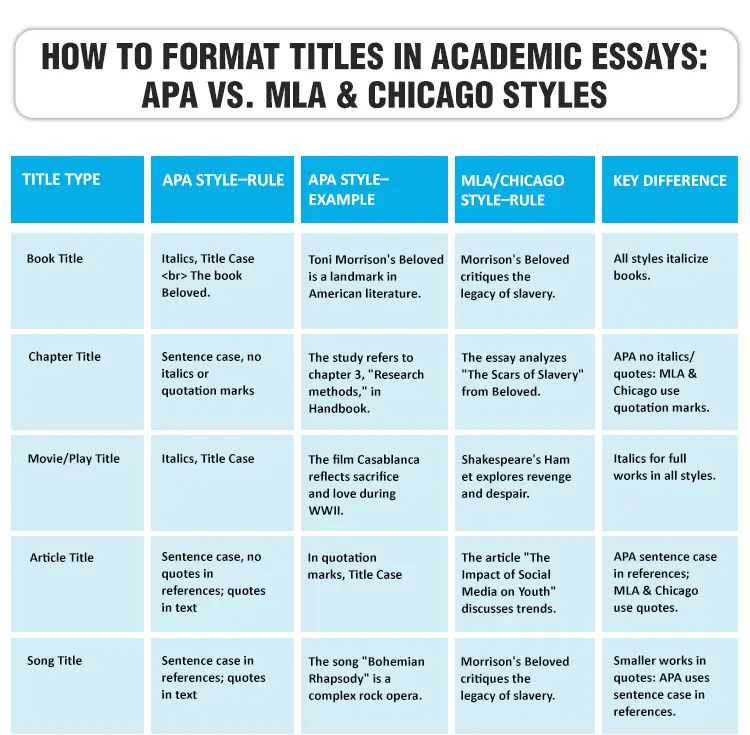
- In-text Citation Format - MLA typically uses parenthetical citations with author and page number (e.g., (Smith 24)). APA uses author-date (e.g., (Smith, 2024)). Both adapt for sources *without* page numbers.
- Reference List Format - MLA uses “Works Cited,” listing entries alphabetically. APA uses “References,” also alphabetical, but with stricter formatting rules for author names and titles.
- Use of DOIs - Both MLA and APA strongly encourage including Digital Object Identifiers (DOIs) when available. APA *requires* DOIs when present. MLA 9th edition treats DOIs as URLs.
- Use of Access Dates - APA 7th edition generally does *not* require access dates unless the source is designed to change over time. MLA includes access dates for all web content.
- Handling of Timestamps - For online video or audio sources, both styles require indicating the specific timestamp within the content being referenced, both in-text and in the full citation.
- Online Journal Articles - Both styles require similar information (author, title, journal, volume, issue, pages) but differ in punctuation and capitalization. APA emphasizes the journal title, while MLA emphasizes the article title.
- Social Media Posts - Both styles now accommodate citations of social media posts. MLA focuses on the author and post content. APA requires the user's name, date, and the content of the post.
Where citation is going
Citation practices will likely continue to evolve in response to new technologies and changing scholarly norms. The rise of AI-generated content and the increasing use of blockchain technology may necessitate new approaches to source verification and attribution. We may see a greater emphasis on provenance – the history of a source and its modifications.
The challenge will be to develop citation methods that can accurately capture the complexity and dynamism of digital sources. This might involve incorporating metadata about the source’s creation, modification, and access history. We might also see the development of new standards for identifying and citing AI-generated content.
I think we’ll see a greater emphasis on data integrity and the reproducibility of research. As digital sources become more prevalent, ensuring the authenticity and reliability of information will be paramount. The future of citation will be about more than just listing sources; it will be about establishing trust and transparency in the digital age.

No comments yet. Be the first to share your thoughts!